



Global Footprint Strategies & Localization
Locate for advantage. Build the right network. Compete on cost and resilience.
Many industrial footprints were built for a cost and demand environment that no longer exists — leaving capacity, sourcing, and production in the wrong places at the wrong cost.
ALTIX helps industrial companies redesign and localize their manufacturing footprint to match where cost, capacity, and demand actually are today.
Executive Perspective
Your footprint is a strategic asset — or a strategic liability.
Industrial leaders are reassessing their networks against a new set of pressures: tariffs, reshoring and nearshoring incentives, labor cost shifts, and the need for resilience against disruption.
Footprint decisions are high-stakes and difficult to reverse — a misjudged plant location or sourcing decision can lock in years of excess cost or exposure.
The companies that compete most effectively treat footprint as an ongoing strategic discipline, not a one-time real estate decision made during a crisis.
Common challenges
How ALTIX Helps

Network Assessment
- Capacity and cost benchmarking
- Network risk and resilience review
- Trade and tariff exposure analysis
- Make-versus-buy and sourcing assessment
Location Strategy
- Site selection criteria and scoring
- Reshoring and nearshoring evaluation
- Total landed cost modeling
- Incentive and regulatory assessment
Localization Planning
- Local supply base development
- Manufacturing localization roadmap
- Workforce and capability planning
- Regulatory and compliance alignment
Network Execution
- Interim site leadership through launch and ramp-up
- Capacity transition planning
- Network governance structure
- Performance monitoring across sites
Featured content
Selected perspectives, interviews and solutions relevant to your priorities. Explore how industry leaders and ALTIX experts approach the challenges shaping industrial transformation.

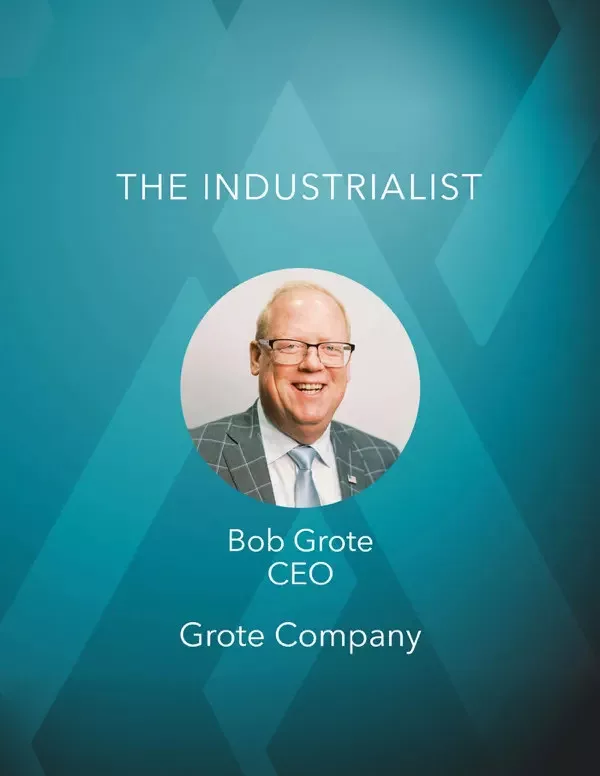
Can Love Make You a Better CEO? Bob Grote Thinks So. A Conversation with Bob Grote, CEO of Grote Company
Listen now
Frequently Asked Questions
What is a manufacturing footprint strategy?
A manufacturing footprint strategy decides where a company produces, sources and holds capacity across its global network, and which plant makes which products, so that cost, service, resilience and growth goals are met together. It covers adding capacity, consolidating or relocating plants, and localizing production for key markets. The question has changed. Boards used to ask where production is cheapest. Today they ask where it is safe, and how fast the company can shift if trade rules change again. Footprint decisions shape the cost base and market access for a decade, so they need to be evaluated across the whole network.
What triggers a company to reevaluate its production footprint?
Common triggers are tariff and trade-policy changes, rising labor or energy costs, shifts in where customers are, supply disruptions, customer requirements for local content, an acquisition that creates overlapping plants, and underused or aging facilities. For manufacturers serving both the US and Europe, the tariff environment of 2025 and 2026 has made footprint a board-level topic again. The companies that come through best treat supply chains as a strategic asset and a strategic risk, not just a cost line, and review the footprint before a crisis forces the decision.
What is the difference between reshoring, nearshoring, and offshoring?
Offshoring moves production far from the end market, usually to lower labor or input costs. Nearshoring moves it closer to the end market or to a nearby lower-cost region: Mexico for North America, or Central and Eastern Europe for Western Europe. Reshoring brings production back to the home market to reduce supply risk, respond to tariffs or shorten lead times. The right answer depends on total landed cost, customer proximity, tariff exposure and the resilience the company is willing to pay for. Most mid-market manufacturers end up with a mix, not a single model.
How do you decide where to locate new manufacturing capacity?
Compare candidate locations on total landed cost, proximity to customers and suppliers, availability and skills of labor, infrastructure, incentives, tariff exposure and the site’s role in the wider network. Price resilience explicitly as well. A second source or a flexible line costs more per unit, but it pays off when a single source fails or the product mix changes. Evaluate the decision across the whole footprint, not location by location, to avoid duplicated capacity or gaps. The decision is expensive to reverse once capital is committed, so it deserves a structured and objective evaluation.
What are the risks of consolidating or relocating a production facility?
The main risks are service disruption during the transfer, loss of skilled people and tacit knowledge, requalification delays for customers and regulators, and relocation costs that the business case underestimated. Relocations fail when they are run as a moving project instead of an operational ramp-up with its own leadership. A disciplined plan covers workforce, equipment, qualification, safety stock and customer communication. ALTIX can go beyond planning: for a European-owned equipment manufacturer relocating its US plant, ALTIX ran interim site operations through the ramp-up.
Let's discuss your priorities.
ALTIX works alongside industrial leaders to turn strategy into results that create lasting value.