



Innovation Acceleration
Govern the portfolio. Scale what works. Stop funding what won't.
Most industrial companies don’t have an innovation idea problem — they have an innovation governance problem, with too many initiatives competing for too little focus.
ALTIX helps industrial leaders build the governance, portfolio discipline, and ecosystem connections needed to take innovation from idea to enterprise-wide impact.
Executive Perspective
Innovation fails to scale more often than it fails to start.
Industrial innovation efforts typically generate plenty of ideas and pilots — what’s missing is a disciplined system for deciding which ones deserve funding, which should stop, and how winners get deployed company-wide.
Without clear governance, innovation portfolios become a collection of disconnected initiatives, each defended by its sponsor, with no enterprise view of where the real value lies.
Companies that scale innovation successfully treat it as a managed portfolio — with explicit criteria, stage gates, and accountability for moving ideas from pilot to production.
Common challenges
How ALTIX Helps

Innovation Governance
- Portfolio governance design
- Stage-gate and funding criteria
- Decision rights and accountability
- Innovation strategy alignment
Portfolio Management
- Portfolio mapping and assessment
- Prioritization against strategic fit
- Resource allocation across initiatives
- Stop-or-scale decisions
Ecosystem Engagement
- Startup and partner scouting
- Academic and ecosystem partnerships
- Open innovation program design
- External technology assessment
Scale-Up Execution
- Scale-readiness assessment
- Deployment and rollout planning
- Cross-functional scale-up governance
- Value tracking after scale-up
Featured content
Selected perspectives, interviews and solutions relevant to your priorities. Explore how industry leaders and ALTIX experts approach the challenges shaping industrial transformation.

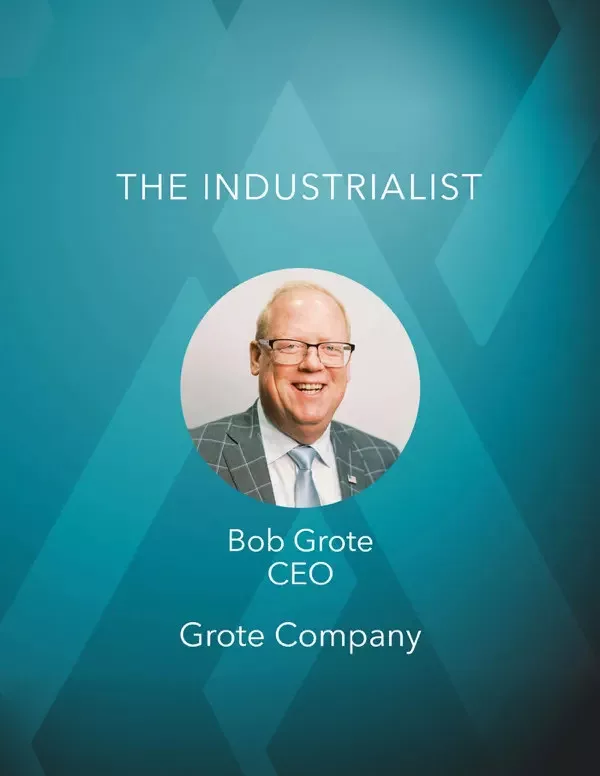
Can Love Make You a Better CEO? Bob Grote Thinks So. A Conversation with Bob Grote, CEO of Grote Company
Listen now

Frequently Asked Questions
What is innovation acceleration, and why does it matter for industrial companies?
Innovation acceleration is the system a company uses to generate, prioritize, fund, stop and scale ideas, from first concept to deployment across plants and markets. It matters because most industrial companies have plenty of ideas. What they lack is a pipeline that makes real decisions: which projects advance, which get stopped, and who takes a winner into the core business. Without that system, innovation stays scattered across functions, stalls after the pilot, or is locked away in a lab the core business never adopts.
Why do industrial companies struggle to scale good ideas?
Industrial companies struggle to scale ideas because promising projects lack a clear owner, dedicated capacity and a defined route into the core business. Three failure patterns recur. Projects are staffed as a side job on top of full workloads. Early-stage projects are judged on this year’s margin, which kills them on schedule. And customers are brought in after development rather than throughout it. A pilot that succeeds at one site then stalls, because no one was ever responsible for rolling it out across plants.
How should an industrial company govern its innovation portfolio?
Govern the portfolio through real gates: set review points with clear criteria, decision rights to continue or stop, and a regular cadence, ideally quarterly and not annually. Give the portfolio a deliberate shape: most investment feeding the core business, a disciplined share in adjacent opportunities, and one small bet beyond. Just as important, stop projects cleanly and recognize the teams involved. A company that punishes teams whose projects are stopped teaches everyone to keep zombie projects alive, and a portfolio that cannot stop anything cannot focus.
What role do external partnerships play in industrial innovation?
Partnerships with technology providers, startups, universities and industry consortia give industrial companies access to capabilities and speed they would take years to build. They are most valuable in fast-moving areas such as industrial AI, robotics and new materials, where learning quickly matters more than owning the technology. Finding partners is rarely the constraint. The constraint is having an internal process to select them, structure the collaboration and bring the results into production. Deliberately looking outside-in, at other industries, customers and new competitors, is also one of the most reliable sources of new ideas.
How do you measure innovation performance in an industrial organization?
Measure innovation across the whole pipeline, using metrics suited to each stage. Early on, measure learning speed and customer evidence. Later, measure time to market, conversion from pilot to production, and the realized margin of scaled projects. Counting ideas submitted or patents filed measures activity, not value. A simple, revealing test is to count your pilots, then count how many became systems running in daily production. If the second number is close to zero, the portfolio has a governance problem, not an ideas problem.
Let's discuss your priorities.
ALTIX works alongside industrial leaders to turn strategy into results that create lasting value.