



Internationalization Strategies
Enter new markets. Expand existing ones. Grow with confidence.
Industrial companies growing internationally face two different challenges depending on where they start — entering a market for the first time, or scaling a presence that has outgrown its original footprint, partners, or operating model.
ALTIX helps industrial companies with both: entering new countries and expanding the scale, footprint, or capability of markets they’re already in — with particular depth in the U.S.
Executive Perspective
Entry and expansion are different problems. Both reward preparation.
Entering a new market and scaling an existing one require different decisions. Entry is about establishing a credible first presence; expansion is about relieving the constraints of a footprint, partner network, or operating model that was built for a smaller scale.
Many industrial companies treat international growth as a single problem, applying entry-stage thinking to an expansion-stage challenge — or the reverse — which leads to decisions that don’t fit where the business actually is in that market.
Whether entering a market or expanding within one, success depends on matching strategy, footprint, and execution to that stage. ALTIX supports both, with particular depth in U.S. entry and expansion.
Common challenges
How ALTIX Helps

Market Strategy
- Market assessment
- Opportunity sizing
- Entry & expansion strategy
- Competitive positioning
Commercial Development
- Channel & partner strategy
- Partner development
- Customer acquisition & growth
- Pricing & value positioning
Local Operating Presence
- Site selection
- Footprint scale-up planning
- Distribution network design
- Supply chain considerations
Execution Support
- Launch or scale-up planning
- Operational ramp-up
- Performance management
- Continuous improvement
Featured content
Selected perspectives, interviews and solutions relevant to your priorities. Explore how industry leaders and ALTIX experts approach the challenges shaping industrial transformation.

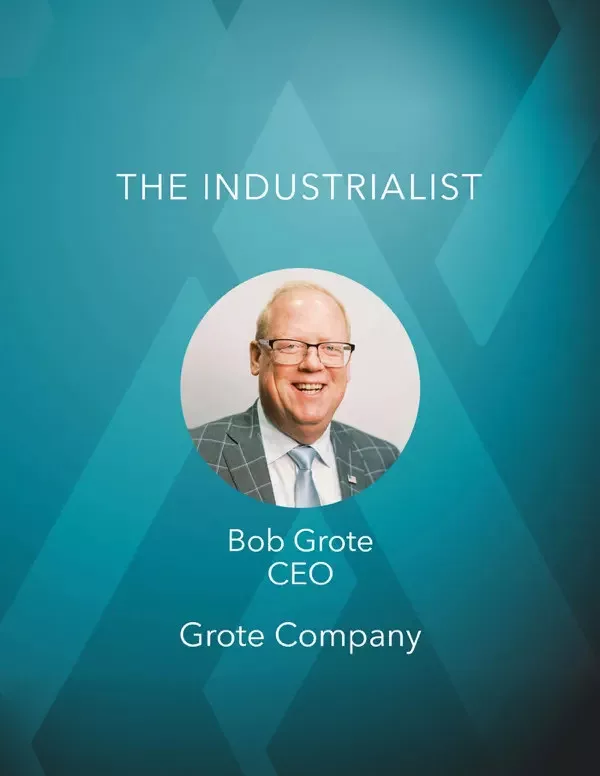
Can Love Make You a Better CEO? Bob Grote Thinks So. A Conversation with Bob Grote, CEO of Grote Company
Listen now
Frequently Asked Questions
What is an internationalization strategy for an industrial company?
An internationalization strategy defines how an industrial company enters, sets up and grows its commercial and industrial presence in a new country or region. It covers market selection, entry mode, local organization, and the governance between headquarters and the new entity. Footprint strategy asks where to produce. Internationalization asks how to build a business in a new market. ALTIX’s leadership team has built and run operations in Europe, Asia and North America, and much of our work supports European manufacturers growing in the US and American manufacturers expanding in Europe.
How should a European manufacturer evaluate expanding into the United States?
Start with where demand is and how customers want to be served: from Europe, through a US sales and service company, or with local assembly or production. Then test the factors that often surprise European companies: tariff and local-content exposure, state-by-state differences in incentives and labor markets, product liability and certification, the speed of US decision-making, and the pool of manufacturing talent. Also assess what the parent can actually support at a distance of six time zones. The ALTIX team works on both sides of the Atlantic, so we assess these points from the US operation’s perspective as well as headquarters’.
What entry modes are available when expanding into a new market?
The main options are exporting through distributors or agents, setting up a direct sales and service subsidiary, building a greenfield plant, forming a joint venture, or acquiring a local company. Each trades speed against control, capital and risk. Greenfield gives full control but takes longer. An acquisition is faster but carries integration risk. Distributors are cheap to start with but limit customer intimacy. Many industrial companies move through these stages over time. If acquisition is an option, assess it together with the company’s M&A strategy and integration capacity.
Why do international expansions fail?
International expansions most often fail because headquarters underestimates local market dynamics, chooses an entry mode that does not match its risk appetite, or under-invests in local leadership and decision rights. The result is a subsidiary that waits for headquarters, loses customers to faster local competitors, and becomes an underperformer. Cultural distance is usually underestimated between the US and Europe too. The two share a vocabulary but differ in labor relations, speed of decision-making and management style. Successful companies treat expansion as a long-term organizational commitment, not a one-off market-entry project.
How do you build local organizational capability in a new market?
Appoint a strong local leader early, define clearly which decisions are made locally and which stay at headquarters, and invest in local talent for the functions that need proximity: sales, service, quality and eventually operations. Put a regular governance rhythm in place so headquarters sees problems early without micromanaging. Plan for the subsidiary’s growth, because the organization that launched the market will not be the one that scales it. ALTIX has stepped in operationally for international subsidiaries, including running an HR function through a transition.
Let’s discuss your U.S. growth strategy.
Let’s discuss your objectives, opportunities, and the right path forward.