



Physical AI, Robotics & Automation
Identify the right applications. Deploy with confidence. Scale across sites.
Robotics and intelligent automation can transform industrial operations — but only when applications are chosen for where machines genuinely outperform current methods, not because the technology is available.
ALTIX helps industrial companies identify, deploy, and scale robotics, automation, and physical AI (machines that sense and adapt to their surroundings) across their operations.
Executive Perspective
Automation succeeds when the application is right — not just the robot.
Industrial leaders are under pressure to automate, but the highest-profile deployments often fail to deliver because the application was chosen for visibility rather than operational fit.
Successful automation requires understanding the process deeply enough to know where a machine genuinely improves throughput, quality, or safety — and where it introduces new complexity and risk.
Companies that scale automation successfully treat it as an operational capability to build site by site, not a series of isolated equipment purchases.
Common challenges
How ALTIX Helps

Application Identification
- Process and workflow assessment
- Automation opportunity identification
- Business case development
- Technology and vendor landscape review
Deployment Design
- Deployment roadmap and sequencing
- Integration planning with existing systems
- Workforce and safety planning
- Vendor selection
Implementation Support
- Pilot design and execution
- Cross-functional implementation governance
- Performance validation
- Issue resolution during rollout
Scale Across Sites
- Multi-site rollout planning
- Standardization of deployment approach
- Performance tracking across sites
- Continuous improvement of deployed systems
Featured content
Selected perspectives, interviews and solutions relevant to your priorities. Explore how industry leaders and ALTIX experts approach the challenges shaping industrial transformation.

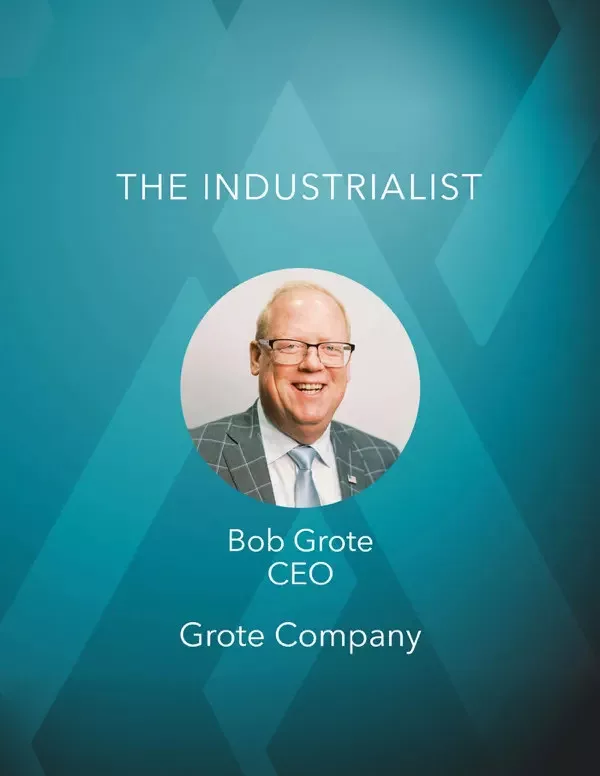
Can Love Make You a Better CEO? Bob Grote Thinks So. A Conversation with Bob Grote, CEO of Grote Company
Listen now

Frequently Asked Questions
What is physical AI, and how does it differ from traditional automation?
Physical AI refers to robots, autonomous mobile vehicles and sensing systems that perceive their environment and adapt their actions in the physical world, instead of repeating a fixed, pre-programmed sequence. Traditional automation performs repetitive tasks under controlled conditions. Physical AI can handle variation in parts, layouts and unexpected obstacles. That widens the range of tasks that can be automated, especially in high-mix, low-volume production typical of mid-market manufacturers. It also raises the bar for data quality, safety validation and workforce skills, which is where most implementations are actually decided.
When should a manufacturer invest in robotics or intelligent automation?
Invest when there is a clear operational case: labor or skills shortages, ergonomic or safety risks, quality variation caused by manual work, or a need for flexibility that manual capacity cannot provide economically. Demographics have made this urgent in the US, in Europe and in parts of Asia, as skilled workers retire faster than they can be replaced. Invest only once the process is stable. Automating an unstable process locks in its waste. The decision should weigh the organization’s ability to integrate, maintain and improve the technology as much as the technology’s capability.
What are common failure points when deploying automation in industrial operations?
Automation projects typically fail when the process was not redesigned before automating, when integration with existing equipment and control systems is underestimated, and when operators and maintenance teams are not prepared to run the new system. Maintenance and technical support after go-live are also routinely under-budgeted. The rule is to climb the ladder in order: stabilize, optimize, then automate. ALTIX has advised manufacturers and distributors on warehouse and production automation decisions, from business case through integration.
How do robotics and automation affect workforce planning?
Automation shifts work from repetitive manual tasks toward supervision, maintenance, programming and exception handling. That requires deliberate reskilling and a clear plan for which roles change, what new skills are needed and how the change is communicated. We recommend “people 4.0 before machines 4.0”: train and involve the operators and engineers who will run and maintain the systems before the equipment arrives, and involve them in the design. People support what they help create. In Europe, the works council should be involved from the start, and in the US, early involvement of supervisors and the union, where one exists, matters just as much.
How do you integrate autonomous systems into existing production lines?
Integrating autonomous systems into an existing (brownfield) line starts with checking compatibility with current equipment, layout, connectivity and control systems. It also requires safety validation for systems that make independent decisions, and clear rules for how robots and people share the floor. Retrofitting an older line is usually harder than designing a new one around autonomy, so the plan has to keep production running while the change happens. Phase the installation, secure buffer capacity and use a fixed ramp-up plan so customers never feel the transition.
Let's discuss your priorities.
ALTIX works alongside industrial leaders to turn strategy into results that create lasting value.