



Product & Process Innovation
Design for performance. Engineer for manufacturability. Industrialize with speed.
Industrial companies win or lose on the strength of their products and the processes that make them — and the gap between a good design and a manufacturable one is where most delays and cost overruns occur.
ALTIX helps industrial companies strengthen product design, improve manufacturing processes, and industrialize new products and processes faster.
Executive Perspective
The best product design still has to be built, reliably and at cost.
Industrial leaders face constant pressure to bring better products to market faster, while manufacturing processes must keep pace with new designs, materials, and performance requirements.
Products designed without manufacturability in mind create cost, quality, and timeline problems that surface only after development is largely complete.
The companies that industrialize fastest build manufacturability and process thinking into product development from the start, rather than treating it as a handoff at the end.
Common challenges
How ALTIX Helps

Product Development Support
- Design-for-manufacturability review
- Product development process assessment
- Cross-functional design governance
- Product architecture and modularization
Process Innovation
- Manufacturing process redesign
- New process technology evaluation
- Process capability assessment
- Continuous improvement integration
Industrialization Planning
- New product introduction roadmap
- Industrialization readiness assessment
- Tooling and capacity planning
- Supplier and sourcing alignment
Launch and Scale-Up
- Production ramp-up planning
- Launch governance and milestone tracking
- Quality and yield management at launch
- Post-launch performance review
Featured content
Selected perspectives, interviews and solutions relevant to your priorities. Explore how industry leaders and ALTIX experts approach the challenges shaping industrial transformation.

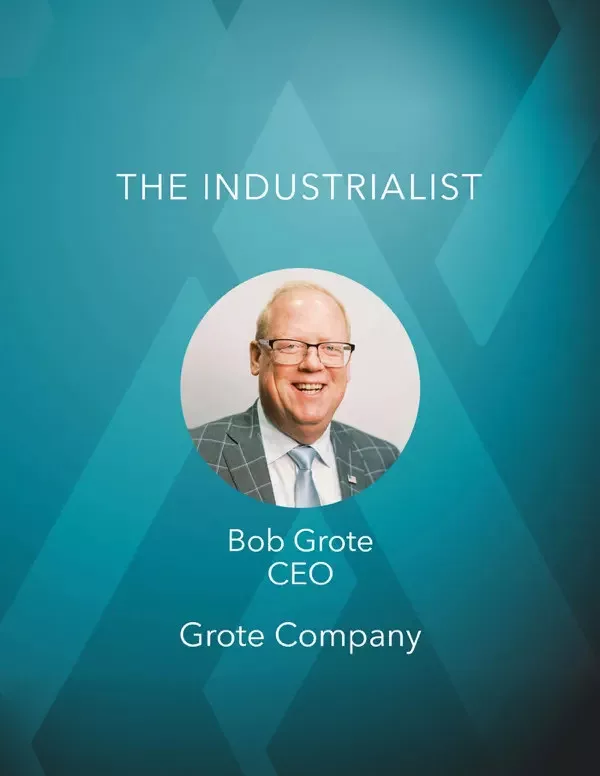
Can Love Make You a Better CEO? Bob Grote Thinks So. A Conversation with Bob Grote, CEO of Grote Company
Listen now
Frequently Asked Questions
What is the difference between product innovation and process innovation?
Product innovation develops new products or meaningfully improves existing ones. Process innovation improves the methods, technologies and systems used to make and deliver them. In industrial companies the two are closely linked: a new design often needs new or adapted processes, and a better process can open up designs that were not viable before. Treating them separately creates products that cannot be made at the target cost and quality. There is also a strategic test. If this year’s product looks like last decade’s, only more refined, the innovation effort may be improving the past rather than building the future.
What is design for manufacturing, and why does it matter?
Design for manufacturing (DFM) means designing products with production cost, quality and assembly in mind from the first sketch, instead of fixing manufacturability after the design is frozen. It matters because most of a product’s lifetime manufacturing cost is locked in during design. Late fixes mean expensive engineering changes, new tooling and delayed launches. Effective DFM puts manufacturing engineering, quality and key suppliers in the development team from the start, with clear criteria at each design review.
How can an industrial company accelerate new product introduction?
Run new product introduction (NPI) as a cross-functional process in which design, manufacturing engineering, supply chain, quality and sales work together from the start. Do not pass the product from department to department. Bring customers in throughout development, not just at launch, and work in short cycles, such as 90 days, with real gates. The front end often hides the biggest delays. In one case, a company needed almost six weeks to produce a customer quotation while a competitor quoted in days. Speed at every step, not only in engineering, determines time to market.
Why do new product and process launches underperform?
Launches usually underperform because manufacturing constraints are found too late, validation before full rollout is insufficient, or no one owns the launch across functions with authority to resolve conflicts quickly. Underestimating operational readiness is especially costly: supplier capability, workforce training, equipment qualification and spare parts. A launch is not a single event. It is a managed transition from development to stable production, with clear criteria for stability and a team that stays until those criteria are met.
How can a manufacturer reduce product complexity without losing customers?
Reduce complexity by designing it out: build products on common platforms and modular architectures, so customer variety is created late in the process from standard modules rather than through custom parts. Start with transparency on which variants actually make money once the cost of complexity is counted, including inventory, changeovers, engineering hours and quality risk. Then design a platform that keeps what customers value and removes what they do not notice. For a US equipment manufacturer, ALTIX led a platforming and modularization program that simplified the product range while protecting customer choice.
Let's discuss your priorities.
ALTIX works alongside industrial leaders to turn strategy into results that create lasting value.