


Strategy
Define direction. Create advantage. Unlock growth.
We help industrial leaders set enterprise and functional priorities, pursue growth through acquisition, align their global footprint, and expand successfully into new markets.
Executive Perspective
Strategy creates value only when it is translated into funded, sequenced decisions — not when it stays on paper. For industrial leaders, that means choosing where to grow, where to allocate capital and management attention, and which assets and capabilities to build.
Many industrial companies run corporate strategy, M&A, footprint, and international growth as separate, uncoordinated efforts. The leaders who create the most enterprise value treat these as one connected set of choices — sequenced and resourced together, and carried through to execution.
Common challenges
How ALTIX Helps

The strategic choices that shape where and how you compete
Corporate & Functional Strategies
Clarify enterprise and functional priorities and build an executable roadmap.
M&A Strategies & Post-Merger Integration
Pursue and integrate acquisitions that create lasting enterprise value.
Global Footprint Strategies & Localization
Design and localize a footprint that matches cost, capacity, and demand.
Internationalization Strategies
Enter and scale successfully in new countries and regions.
Strategy Solutions
The strategic challenges industrial leaders face, and how ALTIX approaches them.


Frequently Asked Questions
What does transformation strategy mean for a mid-market industrial company?
For a mid-market industrial company, transformation strategy means deliberately choosing where to compete, how to grow and where to operate. It also means naming what you will stop doing. It covers four decisions: corporate and functional priorities, growth through acquisition, the manufacturing footprint, and entry into new countries. For multi-site manufacturers with operations in both the US and Europe, these decisions usually interact: an acquisition changes the footprint, and a footprint move changes the international set-up. Strategy is where transformation starts, because it decides which problems are worth solving before capital, capacity and management attention are committed.
What are the signs that a manufacturer’s strategy is out of date?
The clearest sign is a strategy that could have been written five years ago: last year’s plan plus a few percent, with a technology slide added. Other signals include knowing cost per unit to the cent but being unable to price the cost of inflexibility, capital expenditure that mostly perfects the existing product, decisions that move slower than the market, and “our quality” as the answer to every competitive question. In The Superfit Company, Yannick Schilly calls these the five signals of a company still running the 1980 playbook. Three or more usually point to a direction problem, not an execution problem.
How do corporate strategy, M&A, footprint, and internationalization decisions fit together?
They are four levers for the same strategic direction. Corporate and functional strategy sets the priorities. M&A and post-merger integration buy growth or capability. Footprint strategy decides where production, sourcing and capacity sit. Internationalization decides how the company builds a presence in a new country or region. In practice one priority, such as serving US customers under a new tariff regime, can trigger all four at once: a footprint review, a local acquisition, a new US subsidiary set-up and revised functional plans. Treating them as one connected decision prevents parallel initiatives that compete for the same leaders and cash.
Where should an industrial executive start: strategy, M&A, footprint, or international expansion?
Start with the decision that is truly open. If priorities or growth direction are unclear, begin with corporate and functional strategy. If growth is expected through acquisition, M&A strategy and integration planning come first. If the question is where to produce or source within an existing network, begin with footprint strategy. If the question is how to enter or scale in a new country, begin with internationalization. Whichever comes first, keep the list short. We hold leadership teams to three priorities at a time, because a transformation with fourteen “critical” workstreams has not actually chosen anything.
How does ALTIX turn strategy into execution?
ALTIX turns strategy into execution by breaking the multi-year direction into a sequence of hard-scoped resets. Each reset lasts 12 to 24 weeks and commits in advance to measurable results in three ledgers: EBITDA, cash and service. A strategy-deployment instrument, the X-matrix from Hoshin Kanri, connects three-year breakthrough objectives to annual targets, monthly milestones and named owners. Because each reset is staffed with the client’s own people, capability builds with every wave. Where the work requires it, ALTIX also carries operating responsibility, not just advice. We have run interim site operations through a plant relocation and led a client’s HR function during a transition.
Featured content
Selected perspectives, interviews and solutions relevant to your priorities. Explore how industry leaders and ALTIX experts approach the challenges shaping industrial transformation.
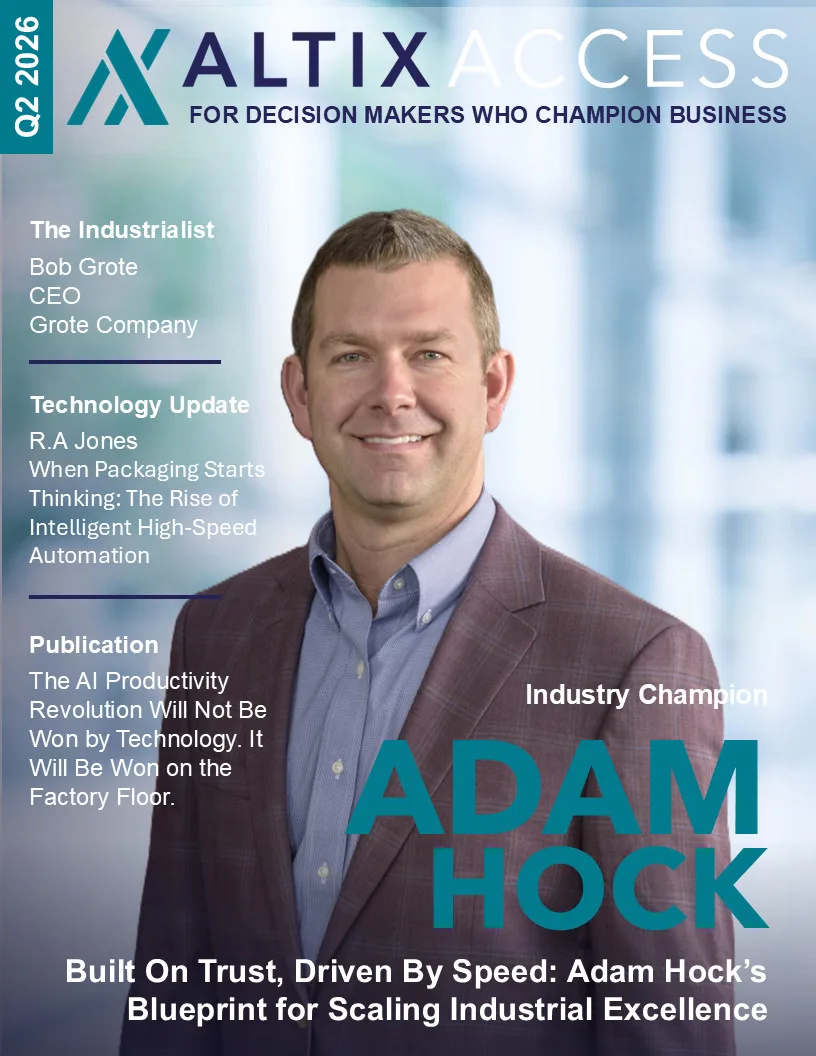
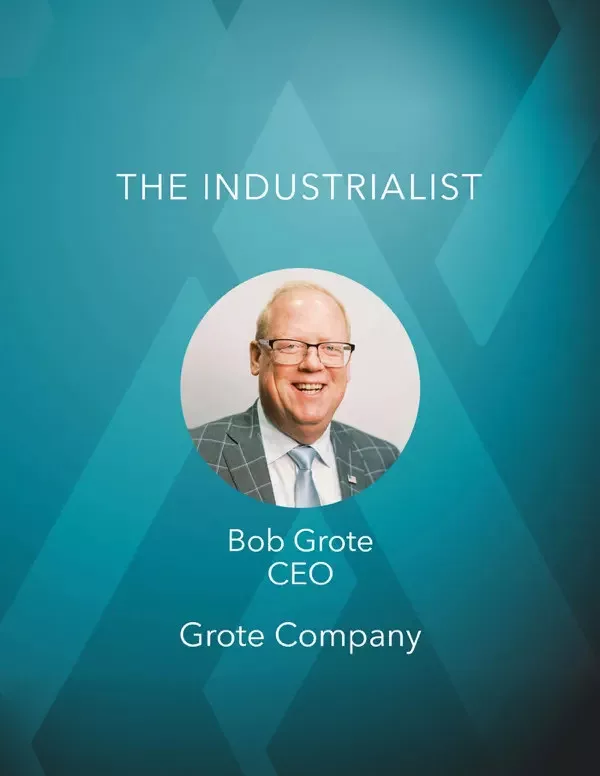
Can Love Make You a Better CEO? Bob Grote Thinks So. A Conversation with Bob Grote, CEO of Grote Company
Listen now
Let’s build your strategy for what’s next.
Talk with our team about your priorities and how ALTIX can help.