


Technology & Innovation
Turn industrial AI, automation, and innovation into measurable value.
We help industrial leaders govern and scale innovation, prioritize digital and AI investments, deploy intelligent automation across their operations, and strengthen the products and processes behind their competitive advantage.
Executive Perspective
The return on technology depends less on the technology than on how it is governed — as a portfolio tied to business outcomes, not as isolated pilots. Industrial leaders face a widening set of choices: where to invest in digital and AI, where physical automation changes the economics of operations, and how new products and processes reach the market faster.
The companies that capture the most value treat innovation governance, digital and AI, physical automation, and product and process innovation as one coordinated system — prioritized together, and scaled beyond the pilot into daily operations.
Common challenges
How ALTIX Helps
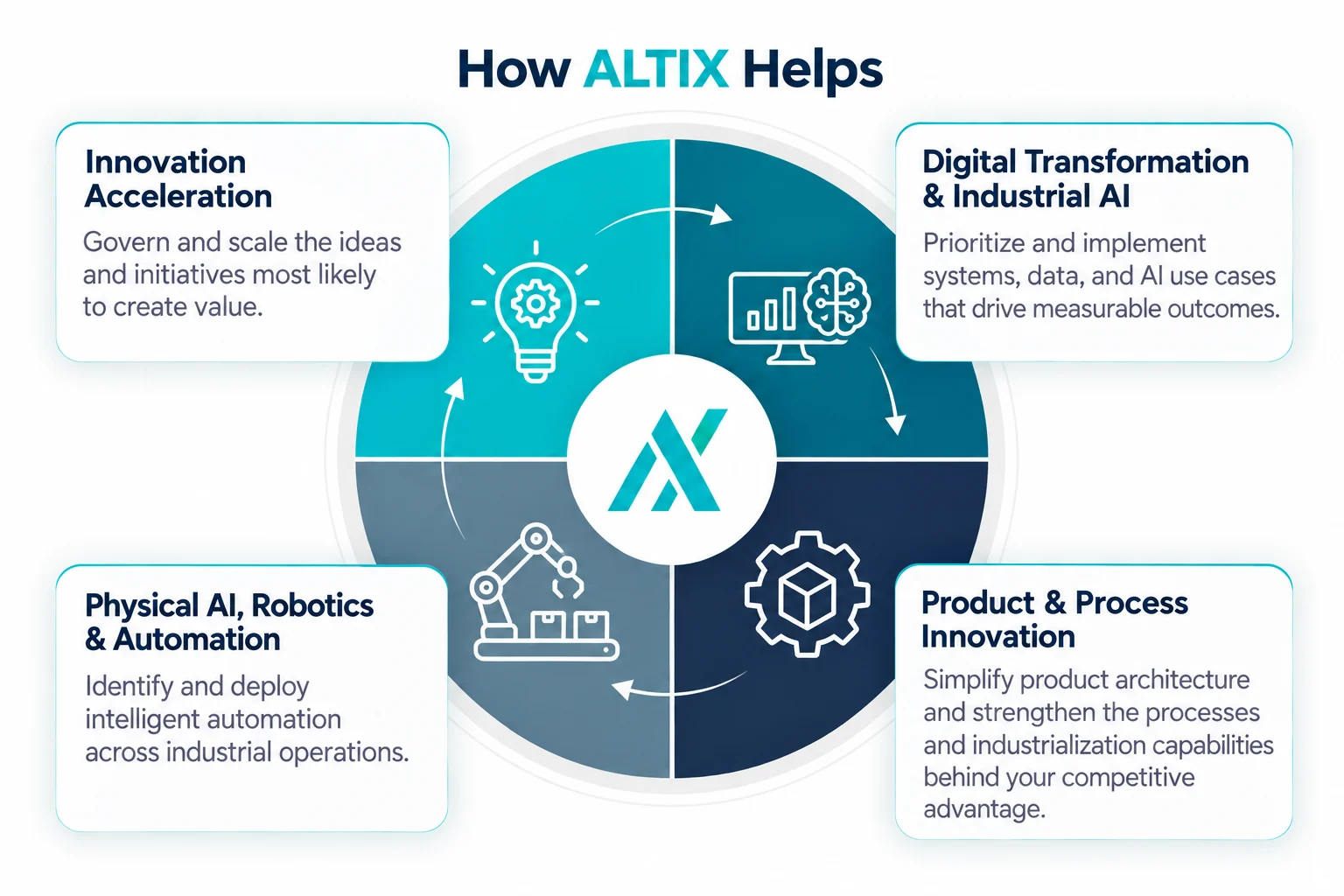
The technology and innovation choices that shape your competitive edge
Innovation Acceleration
Govern and scale the ideas and initiatives most likely to create value.
Digital Transformation & Industrial AI
Prioritize and implement systems, data, and AI use cases that drive measurable outcomes.
Physical AI, Robotics & Automation
Identify and deploy intelligent automation across industrial operations.
Product & Process Innovation
Simplify product architecture and strengthen the processes and industrialization capabilities behind your competitive advantage.
Technology & Innovation Solutions
The AI, automation, and innovation challenges industrial leaders face, and how ALTIX approaches them.


Frequently Asked Questions
What does technology and innovation mean in industrial transformation?
In industrial transformation, technology and innovation means using data, software, AI, automation and better product and process design to create measurable business value, not to collect pilots. It covers four areas: the governance that decides which ideas get funded and scaled, digital transformation and industrial AI, physical AI, robotics and automation, and product and process innovation. The distinction that matters most: industrial AI is what a company buys, while industrial intelligence is what it becomes. Tools can be rented by every competitor. The advantage comes from the organization’s ability to use them well.
How do digital transformation, AI, robotics, and product innovation relate to one another?
They are four parts of one system. Innovation Acceleration decides which initiatives get funded, staffed and stopped. Digital Transformation and Industrial AI creates value through data and decisions. Physical AI, Robotics and Automation creates value through machines acting on the shop floor. Product and Process Innovation shapes what is made and how it is made. A single program often touches all four. A redesigned product platform, for example, may need a new automated line, new quality data and a new stage-gate decision. That is why ALTIX manages them as one coordinated pillar rather than four separate projects.
In what order should a manufacturer invest in technology?
Invest in the order the operation can absorb: stabilize, optimize, automate, digitalize, and only then add intelligence on top of data made reliable by the earlier steps. AI deployed on an unstable process models the chaos precisely, and automation added to a poorly designed process locks in its waste. Within each step, fund use cases tied to money: a named owner, a sized business case and a path into daily operations. Three use cases taken to production are worth more than twenty pilots. The Superfit Company calls this sequence the automation ladder.
Is our company ready for industrial AI?
A company is ready for industrial AI when five elements are in place. First, reliable, owned data in the two or three areas where value is concentrated. Second, a short portfolio of use cases tied to money. Third, operators and engineers who are trained early and involved in the design. Fourth, leadership that can ask what data trained a model, where it fails and how results are verified. Fifth, governance that defines where AI decides, where it recommends and where it never enters. If two or more are missing, start there. ALTIX teaches this readiness framework in its AI AXcelerator executive masterclass.
How does technology and innovation connect to strategy and operational excellence?
Technology and innovation should serve the priorities set in the Strategy pillar and pay off in the Operational Excellence pillar. Investments with no strategic link stay isolated pilots, and investments with no path into operations rarely last. The dependency also runs the other way: digital tools only work on top of a lean backbone of standard work, visible flow and daily problem solving. In a recent Midwest engagement scoped as a digital transformation, the diagnostic showed the company first needed lean fundamentals and a clear strategy, with the digital layer arriving afterwards.
Featured content
Selected perspectives, interviews and solutions relevant to your priorities. Explore how industry leaders and ALTIX experts approach the challenges shaping industrial transformation.

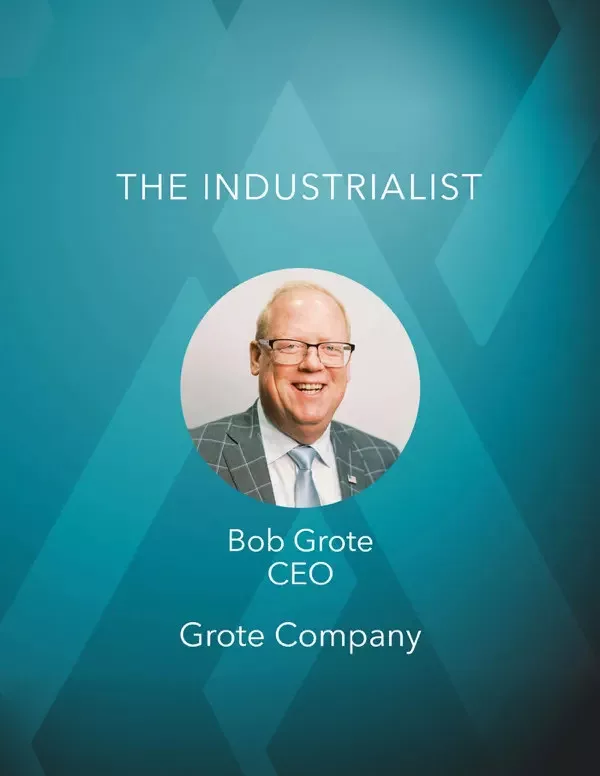
Can Love Make You a Better CEO? Bob Grote Thinks So. A Conversation with Bob Grote, CEO of Grote Company
Listen now
Let's discuss your priorities.
ALTIX works alongside industrial leaders to turn strategy into results that create lasting value.