
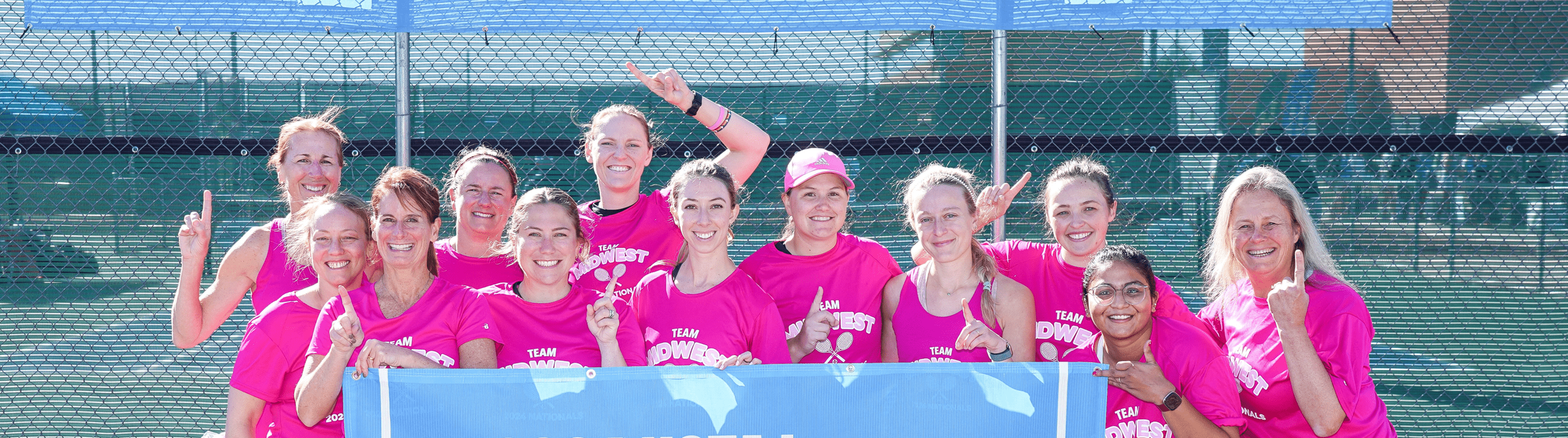
At ALTIX Consulting, we recognize that exceptional leaders are often shaped by transformative life experiences—moments of challenge, resilience, and bold opportunity. For Patricia Rouchon-Wells, ALTIX Partner and seasoned finance executive, that moment came as a teenager when she left France on a tennis scholarship to pursue an education in the United States. What began as a one-year language and cultural immersion quickly evolved into a remarkable journey of academic excellence, athletic achievement, and professional success.
In this interview, Patricia reflects on the lessons learned both on and off the tennis court—from mental endurance and follow-through to staying grounded under pressure. She shares how her early experiences as a competitive athlete laid the foundation for a distinguished 20+ year career in Finance & Accounting at Procter & Gamble, and how that same mindset continues to fuel her work with clients today. Through her story, Patricia offers a powerful example of how discipline, adaptability, and a lifelong passion for learning can propel personal and professional growth—and inspire others to lead with both precision and heart.
Patricia, moving from France to the U.S. as a teenager on a tennis scholarship must have been a big leap. What was that experience like for you personally, and how did it shape the person you’ve become?
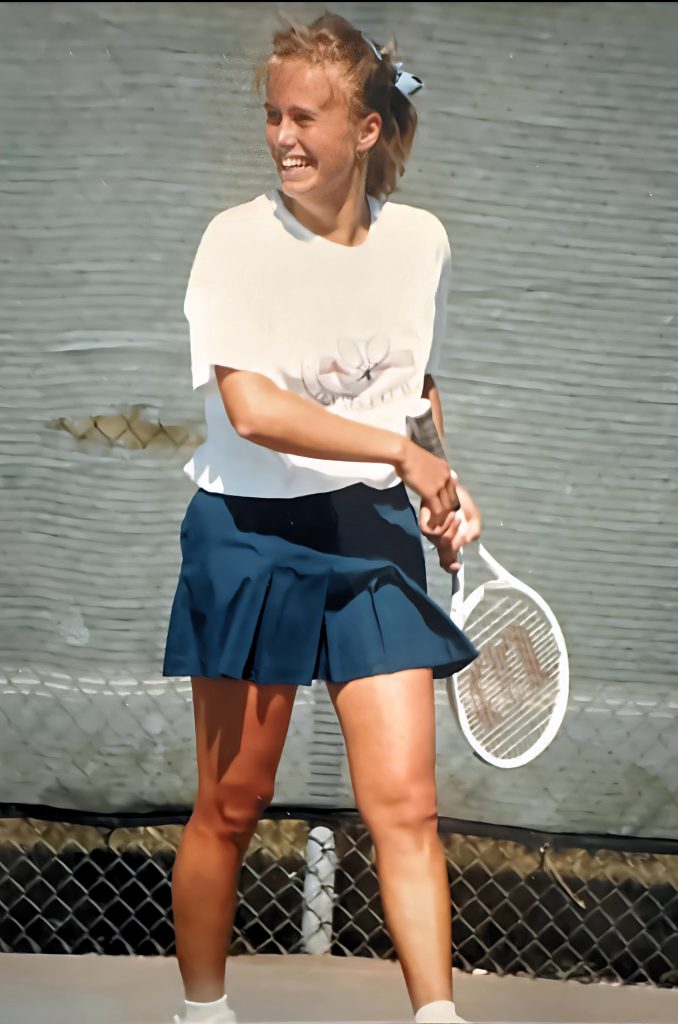
Moving from France to the U.S. as a teenager on a tennis scholarship was a truly transformative experience. After my parents’ divorce, I was raised by my mother and grandmother, who made sure I was immersed early in academics, sports, and culture. Tennis became my passion, and by sixteen, I was ranked among the top 150 female players in France. But after earning top marks on my French BAC exam a year later, I felt my competitive edge slipping and began to shift focus.
Encouraged by my mother to become fluent in English before continuing my studies in France, I seized the unexpected opportunity to attend Carson-Newman University in Tennessee. What was meant to be a one-year English educational immersion and personal growth experience turned into a lifelong journey. The kindness of my coach, host family, and the tight-knit campus community gave me the confidence to grow. I thrived in the U.S. student-athlete system—earning 3-time All-American honors in tennis, receiving the A.O. Duer Award for outstanding junior NAIA female athlete, and maintaining a 4.0 GPA—an opportunity I wouldn’t have had in France.
That leap laid the foundation for my MBA from Vanderbilt’s Owen Graduate School of Management and a 20+ year career in Finance & Accounting at Procter & Gamble. It’s also where I met my husband, Dennis—we’ve been married over 36 years and raised three amazing children together. Proudly Franco-American in my heart and soul, I’m shaped by resilience, adaptability, and a deep appreciation for both my roots and the opportunities I’ve embraced.
What are some of the most meaningful lessons tennis has taught you—on and off the court—that still influence how you approach life today?
Tennis has taught me that big wins—whether in sports or in life—are exciting but short-lived. To keep growing and stay competitive, you have to quickly move on to the next challenge and focus on constant improvement. Wins are great, but they don’t define us. What truly matters is how we bounce back from setbacks. I once saw a quote from Nelson Mandela at a tennis club that really stuck with me: “I never lose. I either win or learn.”
I’ve also learned that once you reach a certain level, everyone has the technical skills. What sets champions apart is how they prepare—how they train, manage their time, care for their body and mind, and surround themselves with the right coaches and mentors. Consistency and discipline give you the edge.
And finally—follow-through. A shot isn’t finished when you hit the ball—it’s the follow-through that gives it direction, spin, and power. It’s the same in life and business. Execution matters. At P&G, execution and follow-through were key performance measures—and that mindset still shapes how I approach my goals today.
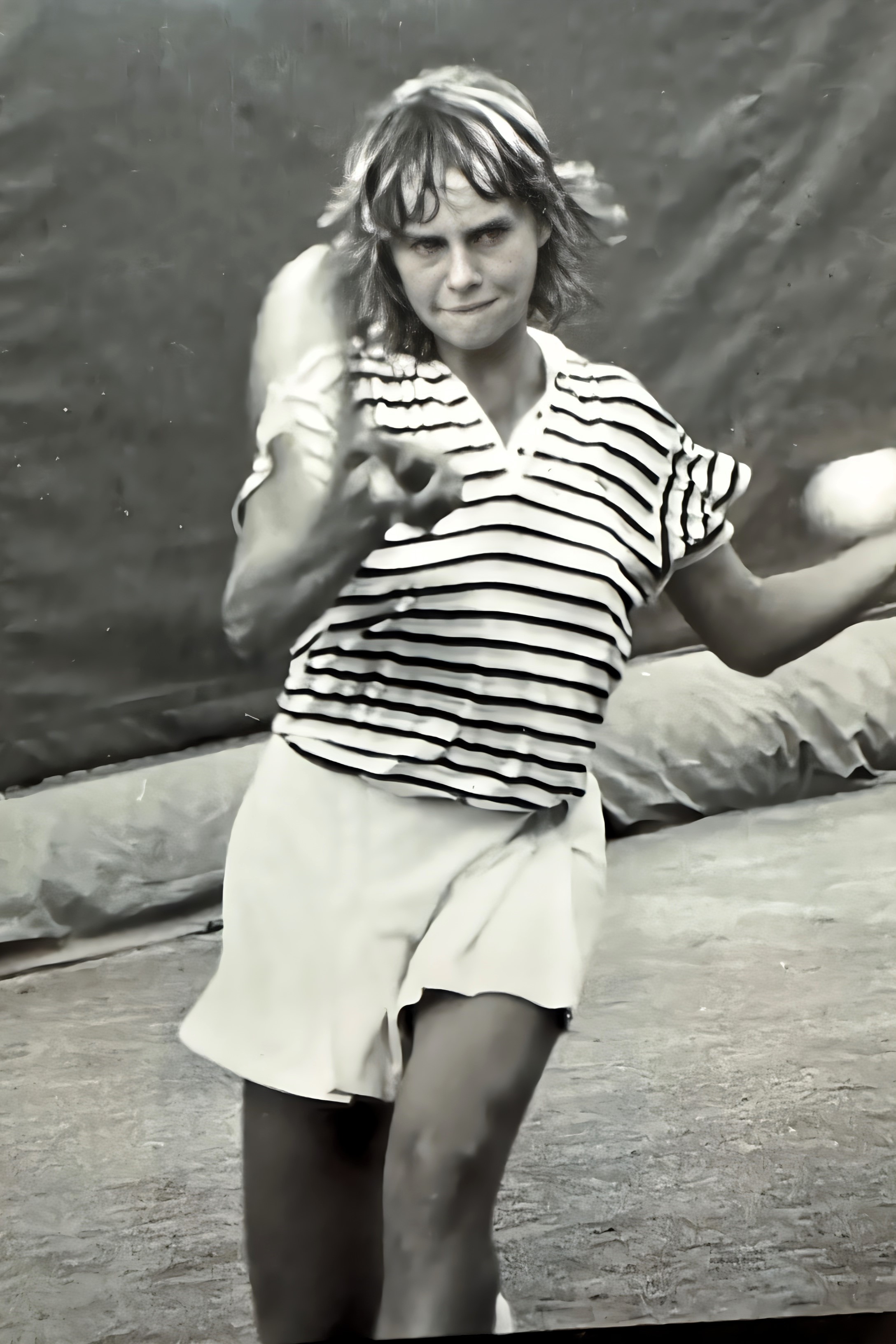
Do you ever find yourself drawing on your athlete’s mindset when you’re tackling a complex financial challenge or helping a client make a tough decision?
Absolutely. One mindset I rely on every day—on the court and in my work—is staying 100% focused on the present moment. In tennis, when things get tough, it’s easy for your mind to wander—to the score, the pressure, or what might go wrong. When that happens, your game falls apart. Over time, I learned to reset: take a few deep breaths, block out the noise, and commit to the next shot.
I take the same approach when working through complex financial planning and analysis. I’m often dealing with large amounts of data—historical performance, current transactions, future projections—on tight deadlines. It can be overwhelming. But by narrowing my focus to the immediate task and the next step, I stay grounded. That helps me remain clear-headed under pressure, whether I’m building a model, diagnosing issues, or uncovering insights that matter to clients.
Tennis requires quick thinking, mental endurance, and the ability to stay cool under pressure. How do those same qualities show up in the way you lead, advise, and support others in your work?
Tennis definitely sharpens your quick thinking—and at a high level, that’s all about anticipation. Roger Federer was a master at this. His ability to read the game and predict his opponent’s next shot made his play look effortless. In business, anticipation is just as important. In finance, that means preparing for multiple scenarios so you’re ready to act when challenges—or opportunities—arise, or quickly shifting back and forth between big-picture strategy and complicated details.
Mental endurance also plays a big role. In tight matches, you have to stick to your process and stay focused, even when things aren’t going your way. For me, that’s about staying present, bringing fresh energy, and applying the same consistency in a client meeting or in my French Zoom classes. I try to be fully tuned in—no distractions, no phone—and create meaningful connections.
As for staying cool under pressure… that’s still a work in progress! I’m emotional by nature and can react impulsively. But I’ve learned that physical activity—especially tennis—helps me regulate stress. Deep breathing and learning from calmer peers have made a real difference. Like tennis, it’s all about practice—and celebrating the small wins.
You’ve kept up a high level of tennis even while building a demanding career. What keeps you coming back to the court—and how do you think that passion fuels your professional life, too?
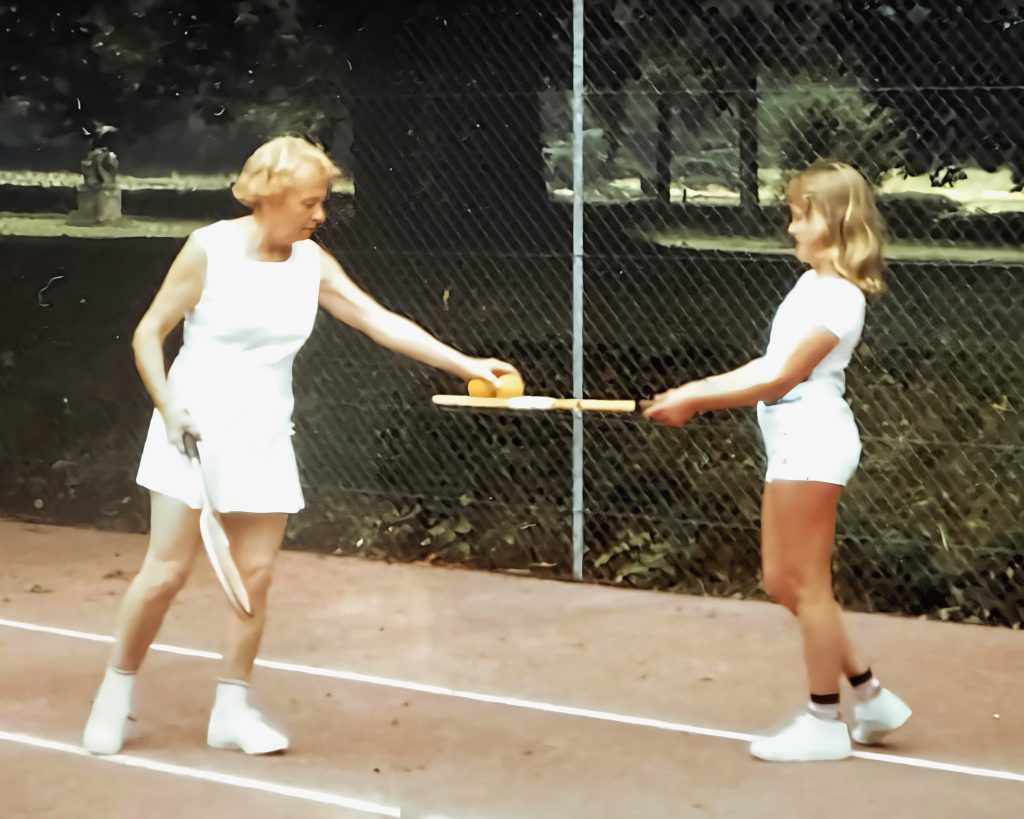
Tennis is the sport of a lifetime. Beyond the physical benefits—some studies say it can even add up to ten years to your life—it’s about community. My grandparents met on a tennis court, and my grandmother played doubles well into her 80s. Her spirit and will to win never faded. My mom passed the tradition down, and now I’m doing the same.
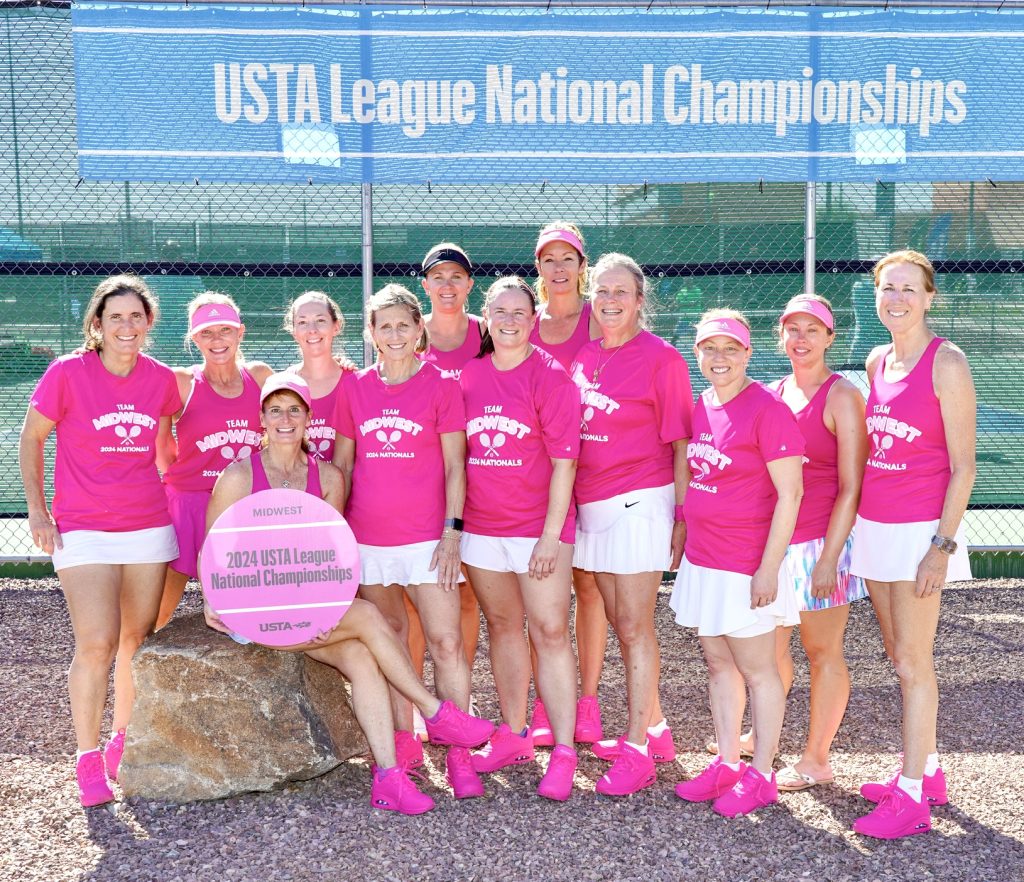
I’ve found I perform at my best—personally and professionally—when I carve out time for competitive tennis. Two years ago, a retired P&G executive invited me to join her new USTA team. Fast forward to last summer and fall: I was competing at the 4.5 USTA level in three age groups and helped our teams win four qualifying rounds to reach Nationals. We finished 5th in the 18+, 6th in the 55+, and 10th in the 40+—top 1%, 2%, and 3% nationally. I trained hard—and it paid off. It brought me back to my college tennis days and reminded me how alive I feel when I’m challenged (even if my game hasn’t aged quite as gracefully as a vintage Bordeaux!).
Tennis has also expanded my network at key moments. In my early career, my rackets mostly stayed in the closet. My husband nudged me back into the game by entering me in a local tournament. I won—and met a fellow player who introduced me to the Cincinnati tennis scene. We’ve been close family friends ever since. After recently relocating to Charlotte, tennis again helped me build a new community through local teams and tournaments.
It’s also become a favorite family pastime. Both sons played high school tennis, one played club at UNC Chapel Hill, and my daughter—formerly a pre-professional ballet dancer—is now hooked. My husband plays too, as a break from golf. We play as a family whenever we’re together, and I plan to enter mixed and women’s doubles with them soon. Tennis has become one of our favorite ways to reconnect.
Tennis fuels my career the same way it fuels my life—with passion, discipline, and joy. It’s something I can pursue for a lifetime, just like my professional goals. And I don’t plan to stop either anytime soon.
When you think about the word “champion,” what does it mean to you—not just in sports, but in how you show up for others and lead by example?
When I think of a “champion,” I think of the people who’ve inspired me—those who model excellence, resilience, and generosity.
On the court, Steffi Graf and Roger Federer are my icons. Their dominance was matched by their grace, humility, and respect for the game. They worked hard, prepared relentlessly, and carried themselves with dignity. Their example still inspires me far beyond tennis.
In my professional life, I was lucky to be mentored early on at P&G by Roger Stewart. He was Assistant Treasurer at the time—a champion by any standard. But what stood out was how he showed up for others. He challenged me to deliver my best while patiently teaching me the ropes. His door was always open. Years later, he’s still giving back—teaching at Purdue, building leadership programs, and advising students. He remains a champion in motion. That blend of excellence and generosity is something I strive to emulate in my own career.
And the most quietly powerful champion in my life is my mother, Anne-Marie. As a young woman, she excelled in school, music and sports, rising to #8 tennis rank in France, reaching advanced level in piano, all while earning master’s degrees in Spanish and French literature. Following a difficult divorce, she pivoted and built a successful tennis coaching career with the French Federation. Now retired, she continues to lead by example, pouring her heart into piano again and giving monthly concerts in retirement homes. Her values and example lit the path for me. Her steady guidance is a reminder that true champions don’t always raise trophies—sometimes, they raise daughters.


