
ALTIX INDUSTRY CHAMPION INTERVIEW
Each quarter we sit down with industry executives and thought leaders to discuss the trends, challenges, and best practices that are transforming their businesses. Today, we are delighted to welcome François Tardif, Executive Vice President, Americas Business Region, FORVIA.
“We Do Not Have Ten Years”
François Tardif has spent his entire career on the supplier side of the automotive industry — Valeo, Autoliv, Plastic Omnium, and since 2012 Faurecia, now FORVIA. He has led businesses in Europe, China and Japan. In February 2025 he took over North America, a mandate that has since expanded to the Americas. He talks to us about regionalized innovation, AI on the plant floor, and why a culture change cannot be allowed to take a decade.
A Car Guy, Four Companies, Three Continents
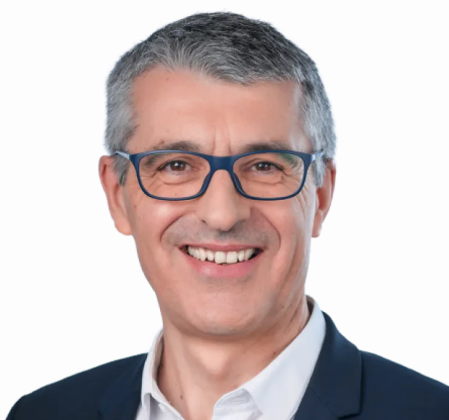
François, thank you for joining us. Let’s start with your own journey — your education, your career, and the moments that shaped the leader you became.
Thank you for having me. I appreciate it very much.
I have spent my whole career in the automotive sector. I’m what some people would call a “car guy,” and I have always worked on the equipment side — the supplier side.
I studied engineering and started my career with Valeo, where I had the opportunity to come and work in the U.S. already at that time, many years ago. I then took on a range of leadership roles in development, R&D, and marketing.
At one point I wanted to experience what I considered a true technology leader in automotive, and I was approached by Autoliv. I felt this was a remarkable company — a technology leader, a market leader and a profitability leader. I joined in general management roles and learned a great deal, including from the Swedish management culture. When you work with Swedes, you learn what is a consensus-driven decision-making processs looks like. I have to say that for French people and notably more globally, latin cultures, this could be perceived as being a bit slow.
Then a former boss of mine convinced me to move to Plastic Omnium, now OPmobility. I took on different roles there, and in particular I had responsibility for operations in Asia. I was working mainly with China and India, but also Korea and other parts of Asia.
What I learned there was the beauty of working for a family-owned business: a true focus on cash and cash management, and speed of decision-making. Everything was based on cash profiles and cash flow. You could make high investment decisions in only the few hours, that was instantly great.
Of course, the other side of a family business is that the environment can become quite intense. At one point I decided to return to a culture closer to my own, and that is when I joined Faurecia — now FORVIA — about 14 years ago.
I worked with Patrick Koller, who was leading Seating at the time. I took on roles within Seating, first with responsibility for mechanisms and then in Europe. Afterwards I moved to China and took responsibility for the China region, based in Shanghai from 2018. In 2022 I moved to Japan and took responsibility for Asia — Japan, India, Korea and ASEAN — while also taking on Clarion Electronics. And on February 1, 2025, I came here to take responsibility for North America, which has since expanded to the Americas.
Six Business Groups, One Sharper Portfolio
For our readers, set the stage. What does FORVIA do, what are your key activities in the Americas, and what problems do you solve for customers?
Since the acquisition of HELLA in early 2022, FORVIA is the seventh-largest automotive technology supplier in the world. We have a significant global footprint and we are present across all the major automotive markets.
We are structured around six Business Groups, which are essentially our major product lines. In automotive that matters, because the business is driven by technologies and product families.
Our largest activity is Seating. We have Electronics, with several distinct areas inside it. We have a substantial Interiors activity — instrument panels, door panels and other interior parts of the car. And we have Clean Mobility, Lighting, and Lifecycle Solutions, which includes the aftermarket but is broader than the traditional aftermarket and also serves special original-equipment applications.
We have recently communicated that we are divesting our Interiors business. That came out of a strategic review of the product portfolio, where we asked ourselves a simple question: where do we want to be, and where can we be clear leaders with strong growth and strong profitability?
Seating is obviously an important activity. We do not expect growth to come from the overall number of seats in the market — every vehicle already needs seats — but we do see growth in content per vehicle, in making seating richer in functionality and in value. In Electronics we hold a position where we can be clear leaders. This is our growth cluster. All other activities, Clean Mobility, Lighting, Lifecyle Solutions, Clarion Electronics, are our value cluster. The classification between growth and value clusters is here to help us focus our investments. for the coming years.
In the Americas, our Business Groups are broadly represented. We have around 24,000 employees across 43 locations in Canada, the United States and Mexico, a large manufacturing footprint and multiple R&D centers. The region represents a bit less than a quarter of Group sales.
From Global Platforms to Regional Innovation
The sector is fiercely competitive. How are you and FORVIA driving innovation — in product, technology and process — while keeping the factories competitive?
Innovation is the heart of our growth strategy for the region. As our sector is changing significantly today, we have to adjust.
Historically, as a Group, we are very product-line focused, and we have organized our innovation centrally per product line. This setup was particularly effective when the industry was built around global vehicle platforms where you could maximize scale. Most of those innovation activities have been in Europe.
What we recognize today is that markets are becoming more and more regionalized. In the past there was a strong trend toward global vehicle platforms, where millions of similar vehicles could be assembled around the world in a single year. That model is changing.
One of the effects of COVID was that everybody began to concentrate much more on local patterns and local requirements. Customers and consumers started expressing local expectations more clearly. It became obvious that we needed to respond; local innovation has to bring technical answers to local markets.
So we are adapting. North America had historically sat inside a Group that was Europe-centric from an innovation standpoint. We have now started reinforcing our innovation activities here.
We organized a major technology session for the Group here in June 2026, the first North American event of its kind. In Asia and China we had held this type of event before, because we had already recognized that those markets have their own specificities and that we needed to get closer to them. We are now reaching that same level of regional focus in North America. It created tremendous enthusiasm in the teams, and I think we are seeing a new momentum here.
In July 2026 we launched a second initiative: an innovation competition, completely open across the organization. It is essentially a call for ideas, and it can be anything — products, manufacturing processes, finance, legal, HR, communications, purchasing… Everybody is encouraged to bring an idea forward. The ideas will be evaluated, we will select a top group, and there will be recognition for the people behind them. If it goes well, it will keep feeding a much broader innovation pipeline.
In this whole innovation scope there is another area where we are putting increasing focus: manufacturing processes. Why? Because we all see the strong push to repatriate or localize manufacturing in the United States. Increasing capacity in the U.S. comes with a cost challenge compared with manufacturing in Mexico or in other lower-cost locations, and with a workforce availability challenge. So we have to find solutions. Automation is obviously one direction, but automation does not mean simply bringing more robots into a plant. It means redefining our processes, redesigning how work is organized, rethinking how we structure activities, and looking at the entire manufacturing system differently. All of that has to come together, and we have a strong push in this area.
Hybrid by Design: Rebuilding the Manufacturing Base
With tariffs, reshoring and regionalization, how are you approaching manufacturing and supply-chain transformation here — plant-led, top-down, or both?
What I am looking for is a hybrid approach.
The geopolitical changes of the past 18 months have obviously required centralized mitigation and crisis-management work. At the same time, we were already quite advanced in a “local for local” supply chain model. When the tariff subject arose, we already had a high share of USMCA-qualified content, and that helped us navigate the situation. But we were not immune. The amounts at stake for a company like ours are significant. So the first response had to be organized and coordinated, particularly around supply chain and the immediate mitigation measures. We are already looking at how to go further.
But when it comes to the cost effectiveness and efficiency of our plants, I am much more in favor of initiatives coming from the plants and the local organizations. There is a lot happening locally in manufacturing processes, especially considering the wealth of innovation solutions made possible by AI, and we see very interesting changes. The challenge is to make sure those initiatives do not stay isolated. There is real value in professionalizing them, sharing them and scaling what works across the organization. That is one of the things we want to strengthen.
All of this sits within a broader framework: AI in the plants, supply-chain management, planning, in controls, and in other processes. There is no single solution, because we have many different plant configurations and situations. Some locations will take incremental steps. Others can make quantum leaps.
AI is clearly one major area, and automation is another. We see humanoid robots in the press almost every day now. We need to understand these technologies, where they are relevant, and how to prepare for them, because technically we are reaching a real transition point.
Wells of Data — and What to Do With Them
Automotive is already highly automated. How do you make the workforce ready for what AI, automation and possibly humanoid robotics bring next?
One important decision we made several years ago was to implement a manufacturing data-management system on a very large scale. We selected a common platform, and since then we have organized things so that essentially all of our plants monitor their manufacturing data continuously into our systems and servers. That gives us a real opportunity today, because we already have the data foundation to build on.
It also means that many people in the plants already understand this digital environment. They live with it and work with it every day. So one part of the digital transformation is already well advanced, and that is a major advantage.
But now we have all of these wells of data, and the question becomes: what do we do with them? How do we use and manipulate the data? How do we create new value from it? How do we use it to make a real difference in our operations? That requires another step-change in competencies.
“Now we have all of these wells of data, and the question becomes: what do we do with them?”
Historically we have had digital engineers and digital technicians. They often came from IT or automation backgrounds and could build and maintain the infrastructure. What we need tomorrow is different. We need people who can create an AI vision for a plant — people who can look at a bottleneck or pain points and ask: how can I solve this? How can I use the data I have? How can I apply an AI agent or another tool to make it happen? That is the next level.
Some of our people will evolve into those roles. Others may not. Where we do not have the competencies internally, we will recruit them.
Our objective is to have AI expertise embedded much closer to the plants — essentially a network, a mesh of competencies across the organization. Once we have that mesh, it will generate more initiatives from the plants upward. Then we need a layer above it that can see what is happening across the organization, connect the different initiatives, make sure we do not create redundancies, and ensure that people work together and share what they learn. That will be a powerful model.
You Do Not Change a Culture by Announcing It
Transformative times demand direction, speed and accountability. What leadership traits are you looking for, and how do you build that mindset across an organization this size?
You are exactly right. Especially in the current context, every day there is new information, every day there is something new to deal with, every day there is a new context to adjust to. In this type of environment, agility becomes a differentiating element between companies. Resiliency is part of it too.
You referred to accountability, and that is part of it. But first, people need to feel comfortable taking control and making decisions — sometimes decisions where the delegation of authority has not been perfectly defined. People need to be willing to decide because they feel empowered, and because they know their manager will support them.
The best illustration of this for me is what happened when I was in China at the beginning of COVID. January 2020. Suddenly we could not go back to work. For a couple of weeks we were communicating by phone and trying to understand what was happening. Nobody really knew what we were dealing with or how dangerous it was. We were trying to organize crisis centers, controls, all the necessary measures. And I can tell you: if we had not had a completely empowered team at that time, we would never have managed it.
I was absolutely amazed. People at all levels and in all locations found solutions. They organized what was needed locally — the masks, the controls, the temperature checks, the processes, all of it. We did not have time nor specific knowledge to tell everybody, “Do this, do that.” People understood what was expected. The framework direction was clear: protect people, manage the situation, do what is necessary. And then everybody acted. For me, that is still the best image of what an agile team looks like.
Coming from a French culture, you can have a tendency toward top-down thinking. Centralized decision-making is not always bad — there are situations where it is necessary. But that experience in China showed me the power of empowerment, and it is very much what we are trying to create here in North America.
At Group level, FORVIA has been evolving its leadership culture as well. Historically there was perhaps more of a traditional French management style, more top-down. Under the leadership of Martin Fisher who took the helm I March 2025, the Group has decided to adopt a new leadership model centered on empowerment and accountability. I am personally very aligned with that. If you ask me what I would like to create here, I would like to recreate the conditions I observed in China: people who understand the direction, feel empowered, decide, and act.
Of course, you do not change a culture simply by saying, “Okay, now you are empowered.” It does not work like that. First, the top leadership has to be exemplary — leaders have to demonstrate the behaviors every day, in every action, every meeting, every decision. Then you have to make those behaviors tangible. We have selected a small number of observable management behaviors and we are deploying them throughout the organization, so that people can see them, challenge them and talk about them.
Speed matters here. You can change a culture in ten years, but we do not have ten years. Making the culture visible through concrete behaviors can make the transformation much faster and much more effective.
“You can change a culture in ten years, but we do not have ten years.”
The Gray Zone
A harder one. Some leaders are obviously right for the job and some are obviously wrong. The difficulty is the gray zone — someone doing nothing dramatically wrong, but not delivering what the organization needs. What is your approach, and how long do you give it?
When you start to have doubts about a person, you’d had better act.
When the doubts become strong, it is usually too late. You need to make an assessment of whether people having difficulties can recover and succeed in the role. If you genuinely believe they can, then you have to go through a very clear process of discussion, communication and coaching. I am very much of the opinion of giving someone a second chance when I believe there is a realistic path forward. But if the second chance does not work, then you have your answer.
The first point for me is to communicate as openly and factually as possible. These situations can become emotional, and emotion does not help anyone. So you need a fact-based discussion. Be as clear as possible about what is expected, give the person the opportunity to respond and improve, and then make the decision.
What Keeps Him Going
Last question. Everyone competes for your time and attention. Where do you find your energy?
That is a question I sometimes ask myself. You wonder why you spend so much energy on an industry that is extremely demanding and does not always give you immediate rewards. I think passion is the answer.
First, I have a passion for the product. I am passionate about cars and automotive products. My second passion is developing people. Seeing people around me grow, take on more responsibility and get promoted is probably my number-one source of satisfaction. Those are the moments that excite me most. And of course I am excited about winning business and building the business.
A strong team gives me energy. When I see the people who work with me develop and succeed, that is a very important part of what keeps me going.
François, this has been a wonderful discussion. We are honored that you joined our Industry Champion series — you are clearly an automotive and industry champion, and we are grateful for your participation.
Thank you. It was really my pleasure. I appreciate your interest in FORVIA, and I am honored to be part of this series. Thank you very much.


